
NI Schools Told to ‘Wear More Clothes’ as Energy Bills Set to Rise by £7.6m
♪
Listen to this article
Hear this story, then continue listening to NIO Radio.
Ready to play.
Article audio is not available in this browser.
Schools across Northern Ireland have been advised to reduce energy consumption and encourage staff and pupils to wear additional clothing rather than turn up heating thermostats. The Education Authority (EA) has warned that gas and electricity costs are forecast to increase by approximately £7.6 million in 2026/27. The advice has prompted criticism from school principals and Northern Ireland’s Children’s Commissioner.
Schools across Northern Ireland have been advised to “wear more clothes” rather than turn up the heating as the Education Authority seeks to reduce energy costs.
The Northern Ireland school heating advice comes as the EA warns that rising gas and electricity prices could add approximately £7.6 million to its energy expenditure during the 2026/27 financial year.
The guidance, highlighted in a report by BBC News NI education correspondent Robbie Meredith on 7 October 2026, has raised concerns about the impact of further energy-saving measures on pupils and staff.
Northern Ireland School Heating Costs Expected to Rise Sharply
The Education Authority has written to school principals warning of substantial increases in energy costs during the current financial year.
According to figures reported by BBC News NI, the EA forecasts:
- Gas costs: An increase from £10.7 million in 2025/26 to approximately £17 million in 2026/27.
- Electricity costs: An increase from £23.8 million to approximately £25.1 million over the same period.
- Combined increase: Approximately £7.6 million in additional expenditure.
Gas expenditure alone is forecast to rise by approximately 60%, while electricity costs are expected to increase by around 5%.
The EA attributed the anticipated increases partly to recent geopolitical developments affecting international energy markets.
In response, schools have been asked to review their energy consumption and identify opportunities to reduce unnecessary use.
These figures are forecasts rather than confirmed expenditure.
What Has the Education Authority Asked Schools to Do?
The EA has outlined a series of measures intended to reduce heating and electricity consumption in schools.
Its official energy-efficiency guidance includes recommendations to:
- Review heating schedules to avoid warming buildings unnecessarily outside school hours.
- Switch off classroom lights when natural daylight provides sufficient lighting.
- Turn off electrical equipment when it is not required.
- Keep windows and external doors closed while heating systems are operating.
- Ensure radiators are not obstructed by furniture.
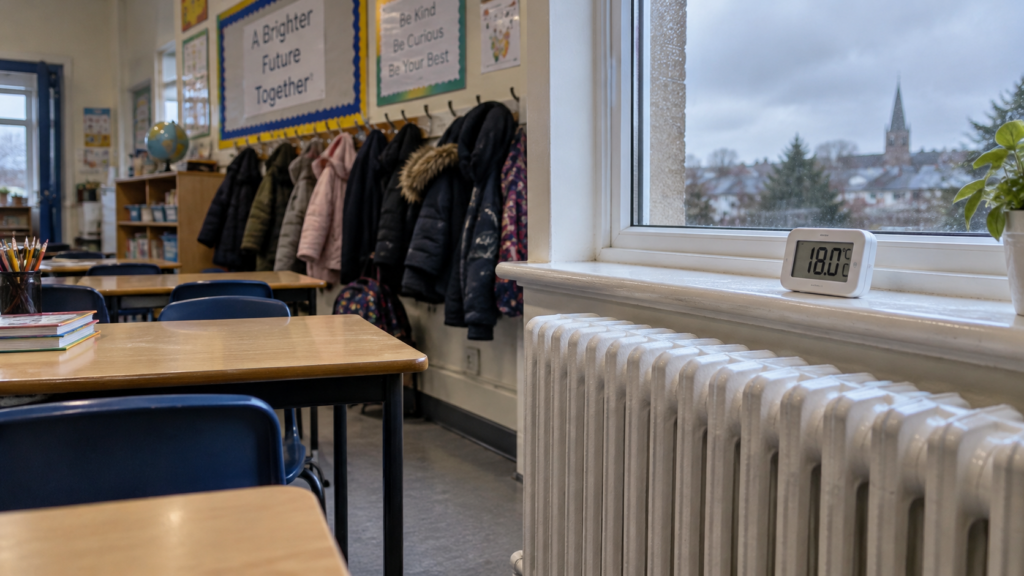
- Check classroom temperatures using thermometers.
- Encourage staff and pupils to wear additional clothing rather than increasing thermostat settings unnecessarily.
The EA’s published guidance specifically advises people to follow recommended temperature settings and wear more clothes rather than turn up the thermostat when they feel cold.
It also suggests that reducing heating operating times by one hour each day could reduce heating costs by around 10%, depending on existing usage and building conditions.
What Temperature Does the EA Recommend for Classrooms?
The Education Authority’s published guidance recommends the following temperatures:
| Area | Recommended temperature |
|---|---|
| Classrooms and dining areas | 18°C |
| Offices and staff rooms | 18°C |
| Medical rooms | 21°C |
| Corridors and toilets | 15°C |
| Gyms and sports halls | 15°C |
| Multi-purpose halls | 15–18°C |
These are recommended temperatures in the EA’s energy-efficiency guidance.
The advice does not instruct schools to leave classrooms unheated or to lower temperatures below appropriate standards.
However, it has prompted questions about how schools can balance reducing expenditure with maintaining comfortable learning environments.
Children’s Commissioner Criticises Advice to Wear More Clothes
Northern Ireland’s Commissioner for Children and Young People, Chris Quinn, criticised the guidance in a statement published on 7 October 2026.
He said:
“No child should be expected to learn in a cold classroom because of budget pressures beyond their control.”
The Commissioner acknowledged that increasing energy costs present a genuine challenge for schools.
However, he argued that these pressures should not be passed on to children.
Quinn also raised concerns about the impact on families experiencing financial hardship, particularly children who may not have access to sufficient warm clothing.
He said decisions about energy savings should consider children’s wellbeing, health and access to education.
The Commissioner’s full response is available on the Northern Ireland Commissioner for Children and Young People’s website.
School Principals Highlight Difficulties in Reducing Heating Costs
School principals have also raised concerns about the practical challenges of reducing energy use.
Speaking to BBC News NI, Kirsty Logan-Hall, principal of Tullygally Primary School in Craigavon, explained that her school’s older building presents difficulties in achieving significant energy savings.
The school must heat and light different areas throughout the day to meet educational, accessibility and pupil welfare requirements.
Other school leaders have highlighted the limitations of heating systems and the difficulty of making further savings while maintaining suitable classroom conditions.
These concerns reflect the challenges facing schools that operate in buildings where substantial reductions in energy consumption may not be straightforward.
Education Authority Guidance Raises Wider Questions About School Buildings
The debate has also drawn attention to the energy efficiency of Northern Ireland’s school buildings.
Older buildings can be more expensive to heat, particularly where insulation and heating controls are less efficient.
The Education Authority’s published guidance identifies several ways schools can improve energy efficiency, including draught-proofing, lighting improvements and better management of heating systems.
However, some improvements require investment rather than changes to everyday behaviour.
Children’s Commissioner Chris Quinn has also questioned whether schools operating in older buildings can realistically achieve significant savings without affecting pupils.
What Happens Next?
The Education Authority is asking schools to identify opportunities to reduce energy consumption as it prepares for higher gas and electricity expenditure.
However, the guidance has prompted concerns about the practical limits of reducing heating costs and the importance of maintaining suitable classroom conditions.
The key challenge will be balancing energy efficiency with the needs of children, teachers and other school staff.
For further information, readers can consult the Education Authority’s official energy guidance and the original BBC News NI report.
Have Your Say
Do you think schools should be asked to make further heating savings, or should additional funding be provided to help manage rising energy bills?
Share your views in the comments and follow Northern Ireland Online for more local news, education updates and developments affecting communities across Northern Ireland.
Local guide
Explore more across Northern Ireland
More News
New Booking and Permit System for Mid and East Antrim Recycling Centres
7 October 2026
No Comments
Read More »
World Heritage UK delegates visit Gracehill UNESCO World Heritage Site
7 October 2026
No Comments
Read More »

Where To Eat
Local guide