
More Than 2,100 Speeding Offences Detected During PSNI Operation Lifesaver
♪
Listen to this article
Hear this story, then continue listening to NIO Radio.
Ready to play.
Article audio is not available in this browser.
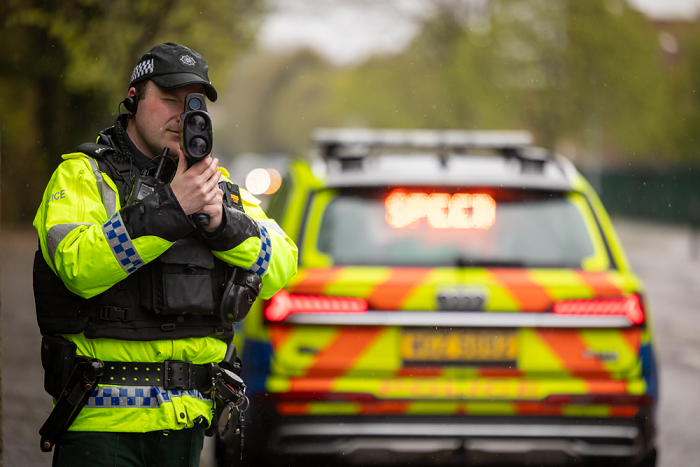
Police detected 2,132 speeding offences during a five-day road safety operation across Northern Ireland.
Operation Lifesaver also identified 308 other traffic offences, including careless driving, uninsured vehicles, drink or drug driving, mobile phone use and seatbelt violations.
Some motorists were recorded travelling at more than twice the legal speed limit.
Thousands Detected Speeding During PSNI Operation Lifesaver
More than 2,100 speeding offences were detected during a five-day PSNI Operation Lifesaver campaign across Northern Ireland.
The Police Service of Northern Ireland said officers recorded 2,132 speeding detections between Monday 27 July and Friday 31 July 2026.
A further 308 traffic-related offences were also detected during the operation.
Most speeding offences were identified using Northern Ireland Road Safety Partnership safety camera vans.
[Insert Link: PSNI road safety information]
Drivers Recorded at Twice and Three Times the Speed Limit
Police highlighted several serious speeding incidents during the operation.
These included:
- A restricted driver travelling at 62mph on a 30mph section of Tandragee Road in Poyntzpass
- A motorist recorded at 81mph on the 40mph Knockbreda carriageway in Belfast
- A driver travelling at 90mph on the A2 Garron Road in Glenariff, where the limit is 30mph
- A motorist recorded at 105mph on the 60mph Belfast Road near Nutts Corner
The Garron Road detection involved a driver travelling at three times the posted speed limit.
Key Operation Lifesaver Figures
During the five-day operation, police recorded:
- 2,132 speeding detections
- 59 careless driving offences
- 57 construction and use offences
- 45 motorists driving without insurance
- 18 suspected drink or drug driving offences
- 18 seatbelt offences
- 15 mobile phone offences
The PSNI said the figures were provisional as of Monday 3 August 2026 and may change.
Operation Lifesaver: Key Figures
2,132 Speeding detections
308 Other traffic offences
5 days Across Northern Ireland
PSNI Calls for Change in Attitudes Towards Speeding
Chief Inspector Celeste Simpson, head of the PSNI’s Road Policing Unit, said drivers continued to ignore road safety warnings.
She said motorists were still speeding, driving after drinking alcohol or taking drugs, failing to wear seatbelts and using mobile phones behind the wheel.
Chief Inspector Simpson said people who committed these offences were putting themselves and other road users at risk.
She added that attitudes suggesting speeding was “not really a crime” needed to change.
Drivers must take personal responsibility and consider what they can do to keep themselves and others safe, she said.
Forty-Four People Have Died on Northern Ireland Roads
Chief Inspector Simpson said 44 people had lost their lives on Northern Ireland’s roads since the beginning of 2026.
Many others have also suffered injuries following road traffic collisions.
She said every death represented a catastrophic loss for families and communities.
“Actions behind the wheel don’t just affect the driver. They affect other road users too,” she said.
The PSNI publishes updates and official information through its road traffic collision statistics page.
What Are the Fatal Five?
The PSNI’s Fatal Five road safety priorities are:
- Do not speed
- Do not use a mobile phone while driving
- Never drink or take drugs before driving
- Avoid distractions behind the wheel
- Always wear a seatbelt
Motorists are being urged to show greater patience, respect and awareness when using Northern Ireland’s roads.
Advice covering speed, seatbelts, distractions, drink-driving and other safety issues is available from the NI Direct road safety service.
Report Dangerous or Careless Driving
Anyone who witnesses dangerous, careless or suspected drink or drug driving should contact police.
Call 101 to report a non-emergency matter.
Call 999 when there is an immediate danger to life or an offence is taking place.
Non-emergency information can also be submitted through the PSNI online reporting service.
Collisions can be reported through the dedicated PSNI road traffic collision reporting service.
Report Dangerous Driving
Call 999 when dangerous driving is taking place and there is an immediate risk. Use the PSNI reporting service for non-emergency information.
Road Safety Is Everyone’s Responsibility
Police said making every journey as safe as possible must remain a priority for all motorists.
Drivers should reduce their speed, remove distractions and leave enough time to complete their journey safely.
Greater patience and awareness could prevent a collision and save a life.
Drivers can find further information through:
- NI Direct road safety advice
- Speed limits and speeding penalties
- Northern Ireland Road Safety Partnership
- PSNI road traffic collision statistics
Help make Northern Ireland’s roads safer.
Slow down, put your phone away, wear your seatbelt and never drive after drinking alcohol or taking drugs.
Share this road safety message with family and friends and read the full PSNI Operation Lifesaver statement.
Local guide
Explore more across Northern Ireland
More News

Carrickfergus singer Robbie McMinn picked by Sir Tom Jones on The Voice UK
4 October 2026
No Comments
Read More »
New Disability Lived Experience Group Gives Mid and East Antrim Residents a Voice
2 October 2026
No Comments
Read More »

Where To Eat
Local guide