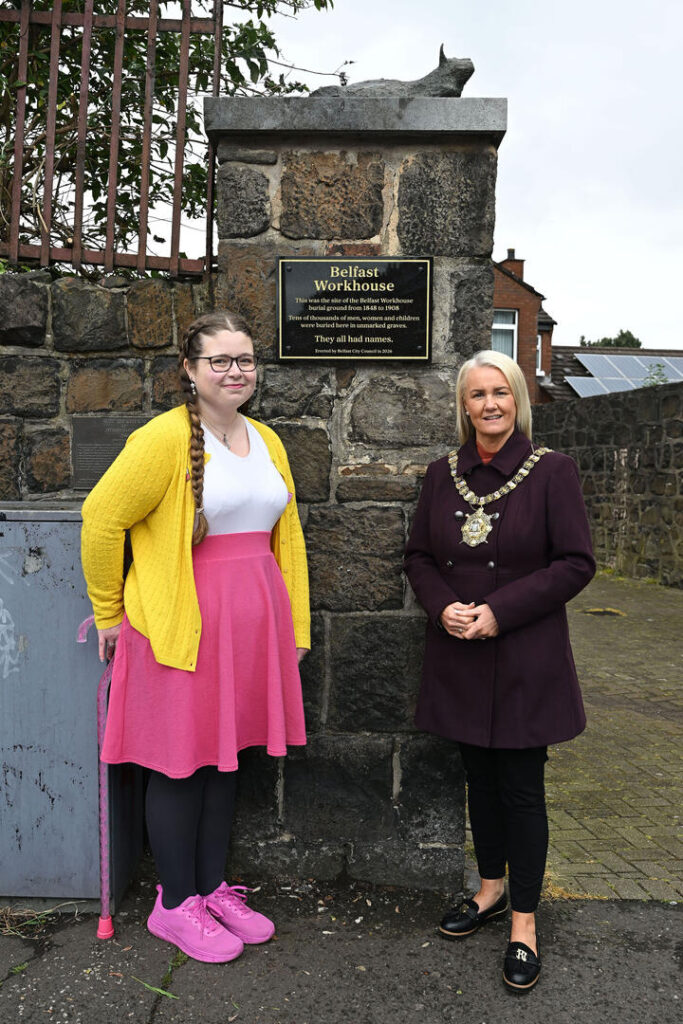
Lord Mayor of Belfast City Council, Councillor Tracy Kelly pictured with social historian and history communicator Robyn Atcheson as they unveil a memorial plaque for over 10,000 people from the former Belfast Workhouse on the Donegall Road who were buried on the site in unmarked graves.
Home » Blog » Council Marks Hidden Burial Ground From Former Belfast Workhouse
Council Marks Hidden Burial Ground From Former Belfast Workhouse
Hear this story, then continue listening to NIO Radio.
Ready to play.
Article audio is not available in this browser.
Belfast WorkhouseBurial Ground Finally Recognised
A hidden burial ground connected to the former Belfast Workhouse has officially been marked with a permanent memorial plaque on the Donegall Road in Belfast.
The Belfast Workhouse burial ground is believed to contain the remains of more than 10,000 people, including men, women and children who died in poverty, during illness outbreaks, and throughout the Great Famine period.
The Belfast Workhouse opened in 1841. As local cemeteries became overcrowded, part of the workhouse grounds was designated as a burial area for those who could not afford private graves.
Today, only a small section of the original workhouse wall and gatepost remains. The new memorial plaque has now been installed there to ensure the site’s history is publicly recognised and remembered.
Lord Mayor Says Memorial Is “Long Overdue”
Speaking at the unveiling, Tracy Kelly said the memorial is an important step in acknowledging a forgotten part of Belfast’s history.
She said:
“This memorial is a long-overdue tribute to the thousands of men, women, and children who were laid to rest here in unmarked graves.”
She added that the memorial ensures those who suffered in the workhouse are finally remembered “with the dignity they deserve.”
The Lord Mayor has campaigned for the installation of the plaque and said the site represents a significant but often overlooked chapter of the city’s past.
Historians Highlight Importance Of Site
Social historian Dr Robyn Atcheson also supported the memorial project and said the burial ground reflects the wider story of Belfast itself.
According to Dr Atcheson, the site includes people affected by poverty, disease and famine, alongside victims of epidemics whose families could not afford burials elsewhere.
She described the memorial as marking “the last remaining Famine grave in Belfast.”
Where The Memorial Is Located
The memorial plaque and surviving gatepost can be found between:
263 – 265 Donegall Road, Belfast, BT12 5N
Why The Belfast Workhouse Matters
Workhouses were introduced across Ireland and Britain during the 19th century to house people living in extreme poverty. Conditions were often harsh, overcrowded and unsanitary.
The Belfast Workhouse became especially significant during the Great Famine, when thousands of desperate families sought shelter and food assistance.
Many who entered the workhouse never left.
The newly installed memorial now serves as a permanent reminder of those lives and the social hardships faced during one of Belfast’s darkest historical periods.