Islandmagee | County Antrim | Historical Witchcraft Case
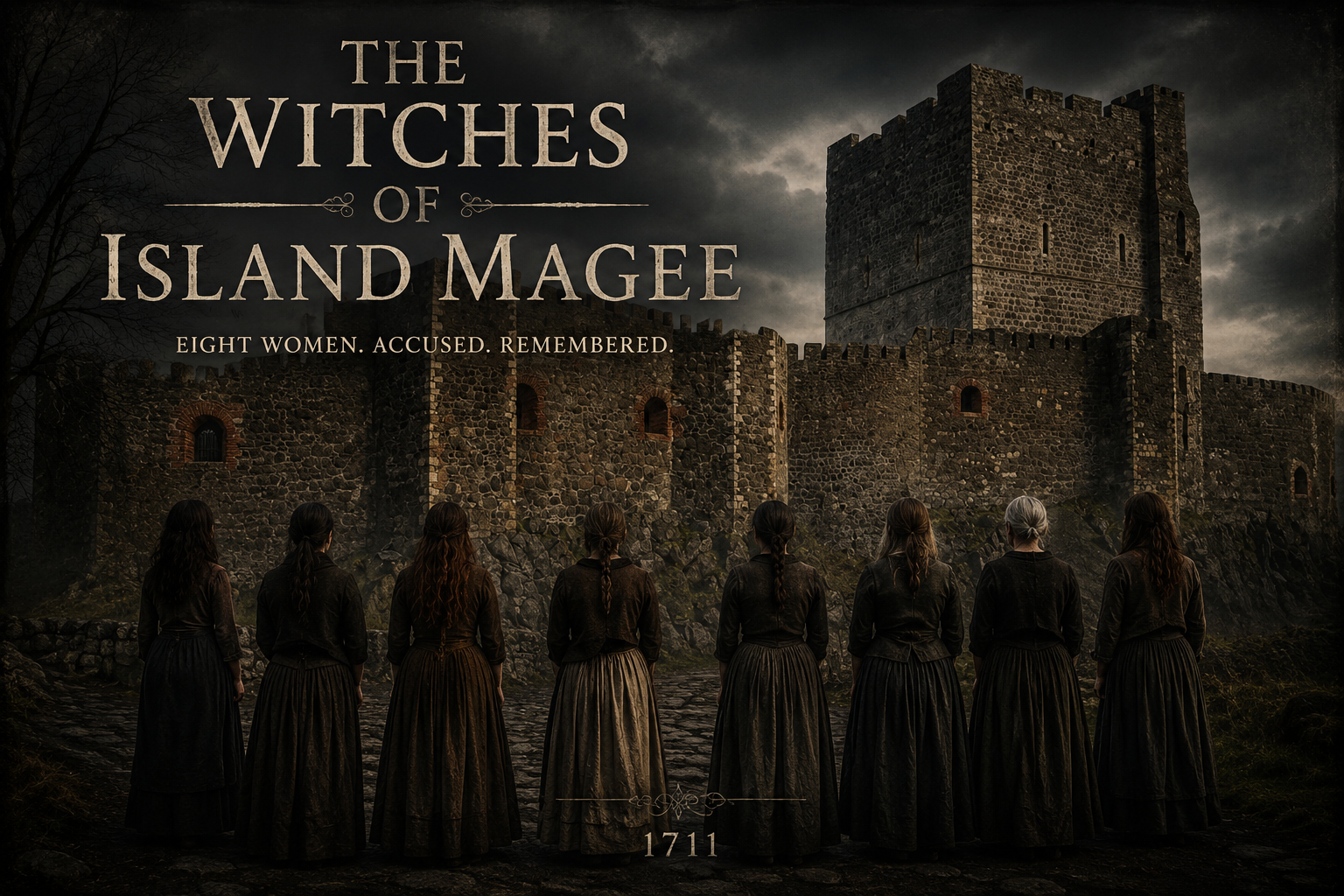
In 1711, eight women from the Islandmagee area were accused of bewitching a teenage girl named Mary Dunbar. Their trial at Carrickfergus became one of the most infamous witchcraft cases in Irish history and is widely regarded as Ireland’s last major witchcraft prosecution.
The case began in Islandmagee in early 1711, after 18-year-old Mary Dunbar was said to suffer violent fits and strange disturbances. Contemporary accounts described her shouting, swearing, throwing Bibles, reacting strongly to clergy and allegedly producing objects such as pins, buttons, nails, glass and wool from her body.
Mary claimed that she was being attacked by witches and identified eight local women as those responsible.
They were:
Janet Carson, Janet Latimer, Janet Main, Janet Millar, Margaret Mitchell, Catherine McCalmond, Janet Liston and Elizabeth Sellor.
The women were brought before the County Antrim Assizes at Carrickfergus and tried on 31 March 1711 under the Irish Witchcraft Act of 1586. They were found guilty of bewitching Mary Dunbar and sentenced to one year and one day in prison, together with four appearances in the pillory.
The story did not end there.
A man named William Sellor, connected to two of the accused women, was later also charged with witchcraft. He was tried separately in September 1711 after Mary Dunbar had died. Historical research suggests he was convicted and probably executed, although surviving records are incomplete.
The Islandmagee case became one of the darkest examples of how fear, religious belief and accusations of witchcraft could shape a community.
History or Legend?
Unlike many of the stories in your Ghosts & Folklore collection, the Islandmagee witches were real people who were genuinely prosecuted by the courts.
A contemporary Dublin newspaper reported in April 1711 that eight women had been tried at Carrickfergus, found guilty and sentenced to imprisonment and the pillory. Academic historian Dr Andrew Sneddon has extensively researched the case and describes it as one of only a very small number of known witchcraft trials in early modern Ireland.
What remains uncertain is whether anything supernatural actually happened.
Mary Dunbar’s reported possession, the accusations against the women and the belief that witchcraft caused her suffering were accepted by many people at the time, but there is no evidence that the accused possessed supernatural powers.
The Islandmagee case is therefore best understood as documented history shaped by contemporary belief in witchcraft, rather than proof that the women were witches.
That distinction is important: the trial was real; the alleged witchcraft remains part of the belief system and folklore of the period.
The Witches of Islandmagee Memorial Stone
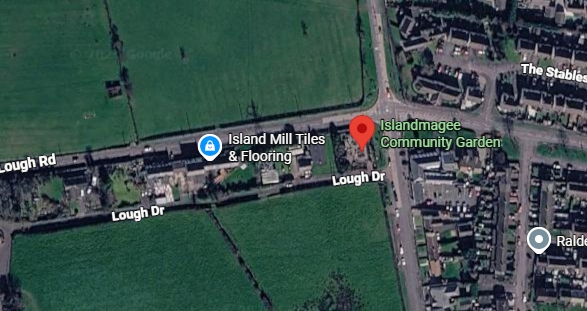
In April 2026, the memorial stone commemorating those convicted in the 1711 Islandmagee witch trials was moved to Islandmagee Community Garden on Ballystruder Road, where it now provides a more accessible place for remembrance and reflection.